Published: Issue 2, Spring 2010
By JASMINE MAHMOUD
For the past few months, I have been practicing chamber music with a string quartet. I play second violin (a position ripe for “second fiddle” jokes) with three other women, who—like me—seek one moment in the week for word-free, string-filled harmony. In our quest, I noticed something curious. Our repertoire includes “Jesu Joy of Man’s Desiring” (Bach), “Arrival of the Queen of Sheba” (Handel), “Air on the G String” (Bach), “Summertime” (Gershwin), and “Prelude from English Suite No. 3” (Bach). A lot of Bach. We string players, like everyone else, have biases. This issue was born within a resonant field of bias. Tenth anniversary stagings of The Laramie Project. Uninformed words about the arts scene in Peroria, IL from the top arts official in the land, NEA Chair Rocco Landesman. Contested high school stagings of Rent. Jerry Saltz, a top art critic, decrying gender bias at the Museum of Modern Art, a top museum.
The above has mostly lived in the space of last year, 2009. Yet, the intersection of bias and the arts provides a stream of longstanding and current material. It’s the yearly recognition that the Academy Awards celebrate “bests” in a rather homogenous and politicized field. (That said, landmark 2010 wins by Kathryn Bigelow for Best Director and Mo’Nique for Best Supporting Actress indicate, perhaps, the path towards a new and needed direction). It’s the recurring fight for arts funding—and by extension recognition that the arts are not “second fiddle,” but rather a valid part of society—at local, state and federal levels. (For more instances and solutions, see “Arts Policy Brief.”)
But there are also less told stories of bias. In San Francisco, artist Wendy Testu curated “The Welcome to the NeighborHOOD Project.” (See Exhibition.) This youth-led exhibition revealed untold portraits of Hunters Point/Bayview, a waterfront neighborhood plagued by neglect: where the city of San Francisco allowed toxic dumping near a community comprised largely of low-income African-American residents. In Cambridge, MA doctoral student Edward Clapp put out what became a controversial call for 20UNDER40, for essays about how to improve the arts from those under forty-years of age. (See his thoughts on the controversy in the Special Report essay “Mistaking Inclusion for Exclusion.”) When editing this issue, I strived to unearth these stories of bias to best improve the arts.
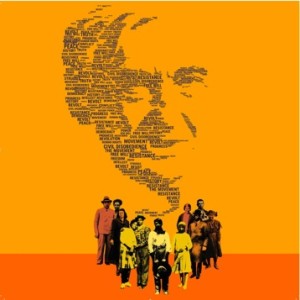
But the significance of this issue goes beyond the arts. Earlier this year when Howard Zinn passed, I was reminded of his gift. Zinn, the People’s historian, chronicled history through the stories of everyday folk and their struggle for a more perfect society, a struggle to match the rhetoric of inclusivity, equality and justice to reality. Zinn’s bias—to cover untold stories—was his tool against bias.
Lessons from Zinn better illuminate why investigations around arts, politics and bias are necessary. Zinn wrote, “What we learn about the past does not give us absolute truth about the present, but it may cause us to look deeper than the glib statements made by political leaders and the ‘experts’ quoted in the press.” Information is a powerful activism tool. This Robert A. K. Gonyo and Ashley Marinaccio—founders and Artistic Directors of Co-op Theatre East, a New York City-based theater company that produces civically engaged performance—prove. During last year’s election season, they staged “The Living Voter Guide” on the streets of New York City—a performed and informative guide for passerbys about upcoming city races. (See Opening Acts.) Similarly the Brainstromers—an art collective, performance group and think-tank—forced discussion on gross gender bias in the contemporary art world. (Read about their activism in TAP*MAP). We privilege information as a tool to cut through bias, and as a means to make better decisions. That’s why, in “Policy Brief Update: Artists in Empty Storefronts,” I interviewed engineers of art-in-storefront campaigns to chart this trend for future practitioners.
A second lesson: “What matters most is not who is sitting in the White House, but ‘who is sitting in’ and who is marching outside the White House, pushing for change.” Teenagers in Staunton, VA knew this when they stormed their town hall— fifty youth strong—to protest the closing of Kronos Art Gallery, as chronicled in the Special Report interview, “The March for Kronos: All Ages Venues Under Attack.” Marching can take many forms—as artists Michael Premo and Rachel Falcone reveal. They curated “Housing is a Human Right,” (also in the Special Report section) a multimedia documentary portrait of everyday New Yorkers struggling to retain their homes.
Third lesson: “We don’t have to engage in grand, heroic actions to participate in the process of change. Small acts, when multiplied by millions of people, can transform the world.” Take Betty Lark Ross, a teacher in Chicago, IL, who wrote to United States Secretary of Education Arne Duncan in “Letter to the Policymaker.” With frustration and proposed solutions, Ross implored Duncan to make the arts matter in public education. Her means to improve arts education—a letter—is an example that many of us can follow.
A fourth lesson: “The artist… is telling us what the world should be like, even if it isn’t that way now. The artist is taking us away from moments of horror… by showing us what is possible.” Some policymakers, like Seattle, WA City Councilmember Sally Bagshaw, know this. To best plan a new waterfront for the emerald city, Bagshaw incorporated artists into Seattle’s waterfront planning (See Dialogue for more). In Exhibition and TAP*MAP, artists like Garry Lee Posey and Joe Goode, two directors of anti-bias plays, speak about staging possibilities of justice and progress.
Throughout this issue, we celebrate Howard Zinn’s anti-bias ethos. (Flip the magazine to the back cover to find Shanthony Exum’s tribute to Zinn.) But we also identify, and even—when appropriate—celebrate, our own biases. We, each of us, have biases, which when recognized, can be a tool for understanding and action. Very much like quartet practice, an awareness of the ongoing concert of biases can act as needed moment for harmony, and for progress. TAP